


5 spots in 70 formats within 17 days? No problem!
How we shot employer branding spots for KBC Global Services
A better place, a better life
Agency Narrative Media asked us to produce several recruitment spots for KBC Global Services, as part of a campaign they have been running for five years.
The campaign rests on a simple idea: work does not have to take up your whole life. Even in a corporation, a person can finish on time, close the laptop and spend the rest of the day on what matters outside of work.
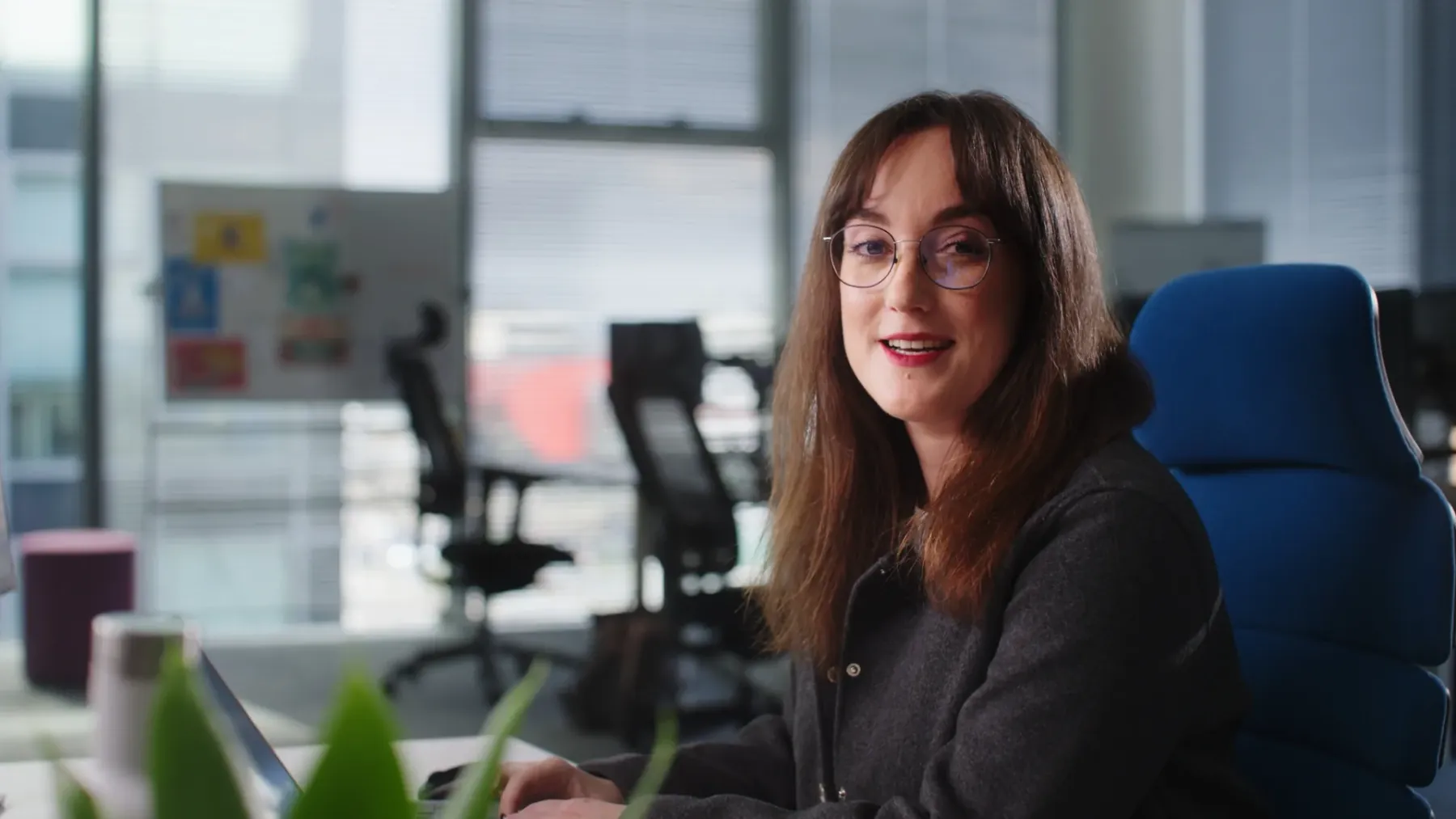
That work-life balance is what we wanted the KBC Global Services spots to show. Instead of overtime, evening meetings and the feeling that you always have to be available, we focused on what comes after office hours: free time, family, friends or sport.
Work does not have to take up your whole life.
Pretty much everything was in this one
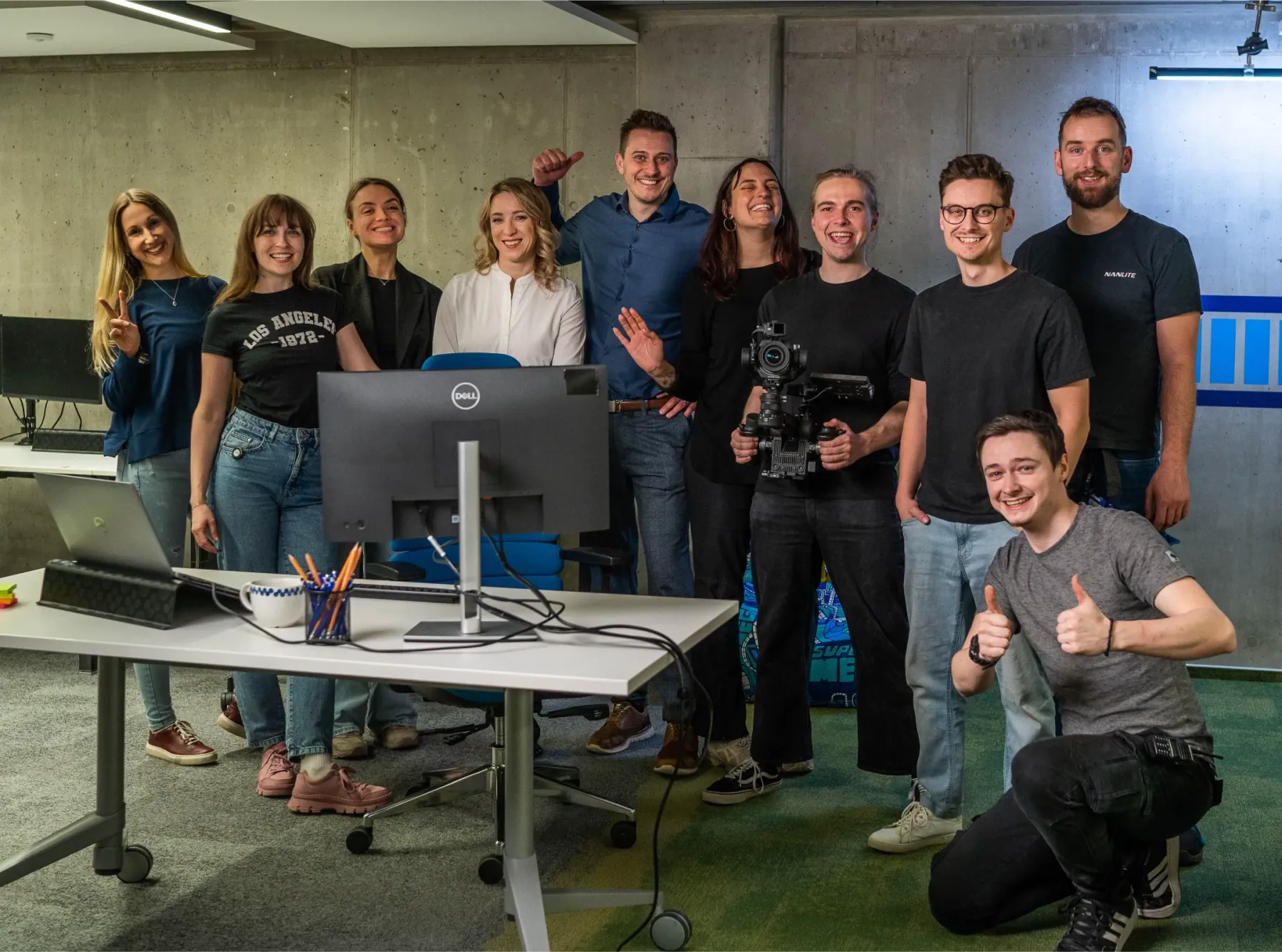
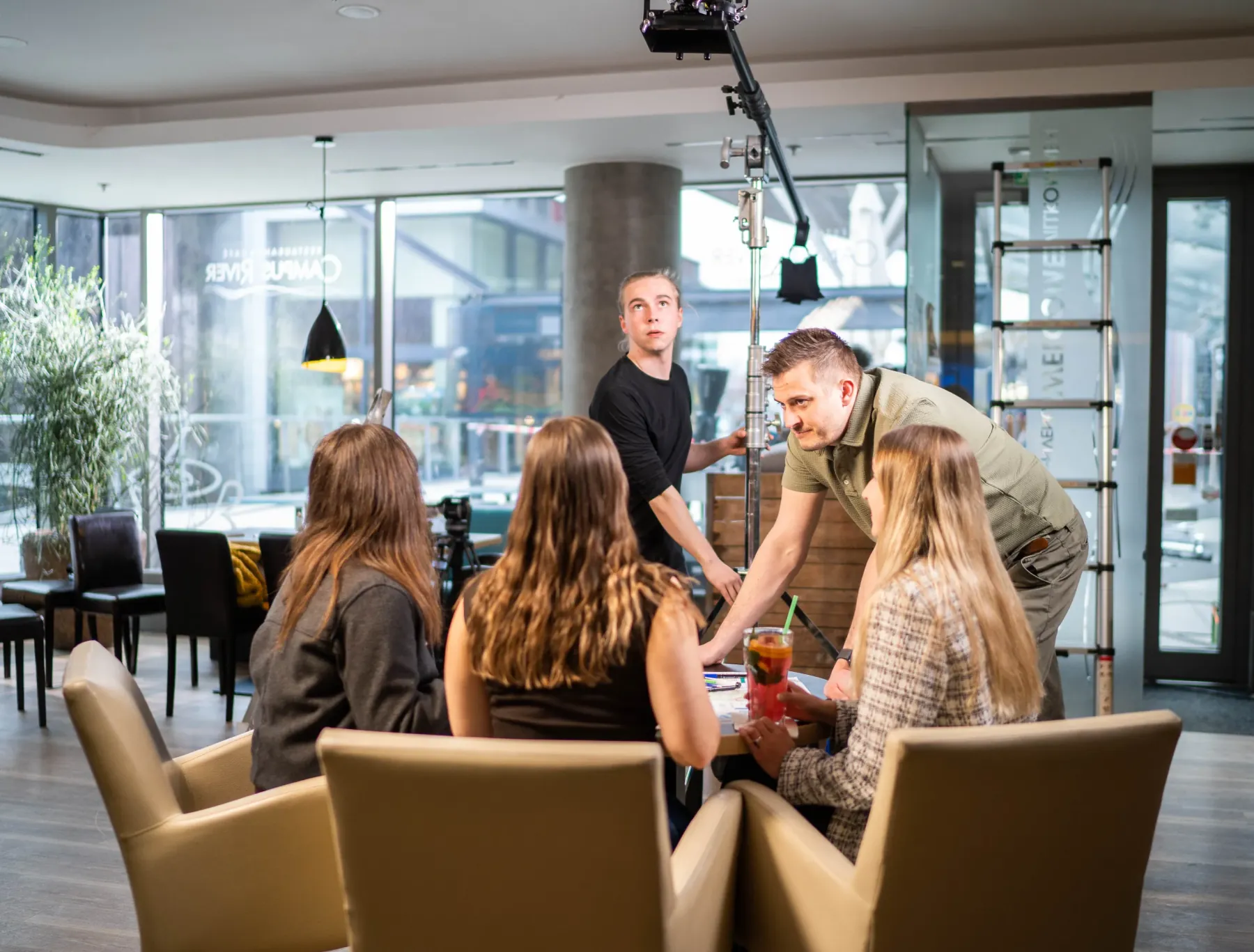
Five spots, three shoot days, eight locations, four actors, kids, a dog and orbital camera moves. This project was not short on variety.
- 5
- spots
- 3
- shoot days
- 8
- locations
- 70
- formats
The scripts, written by Leni Šremerová, were built as a series of four spots. Each one was split, in a way, into two halves. The first showed one workplace and introduced the specific role that department plays at KBC Global Services.
In the second half, an orbital camera move carried us from the office into a completely different, non-work setting, to show that the employees are not typical corporate drones. They have a life of their own.
The scripts were written so that all four spots could be joined at the end into a single hero film.
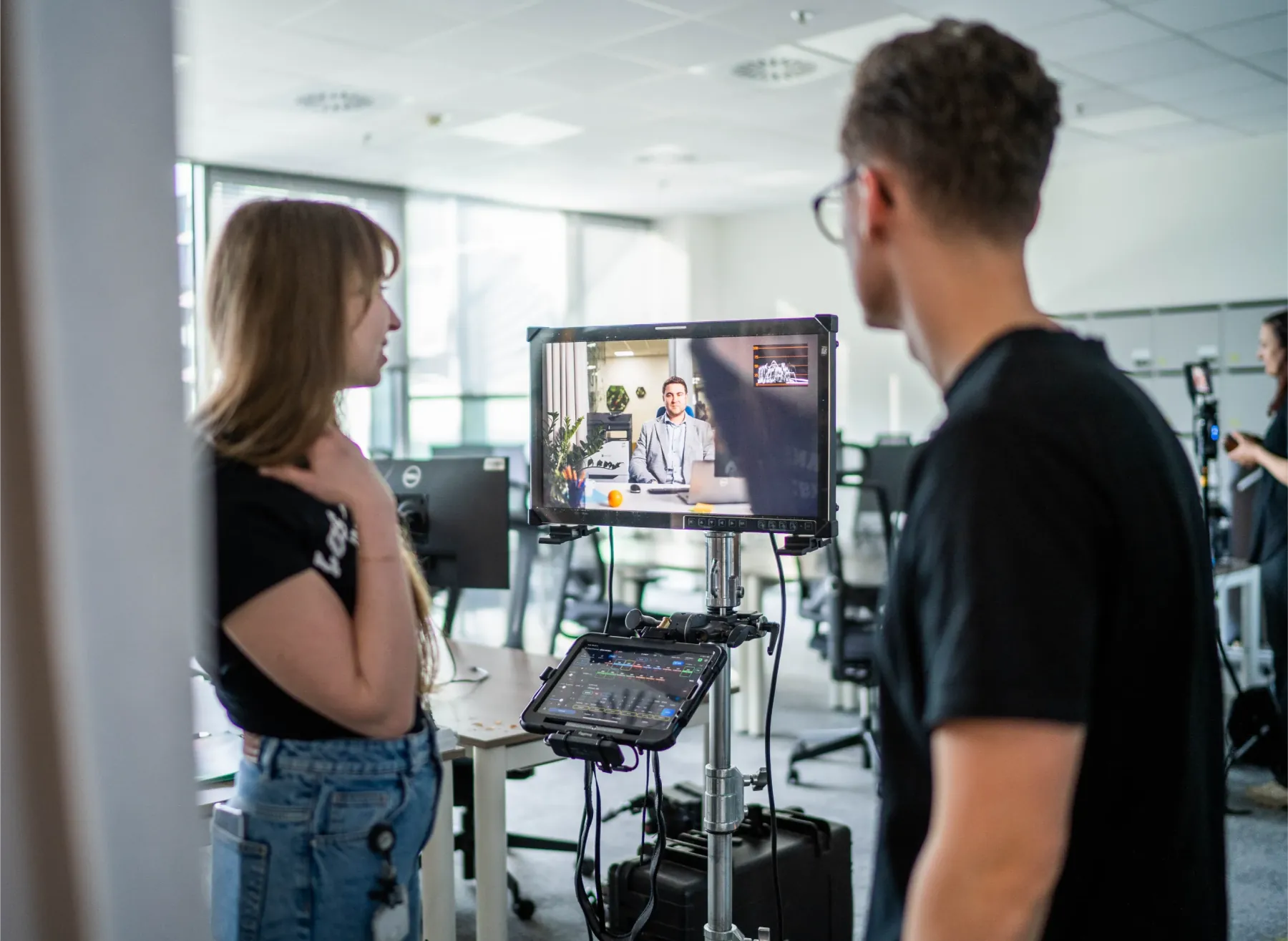
A shift to the bone
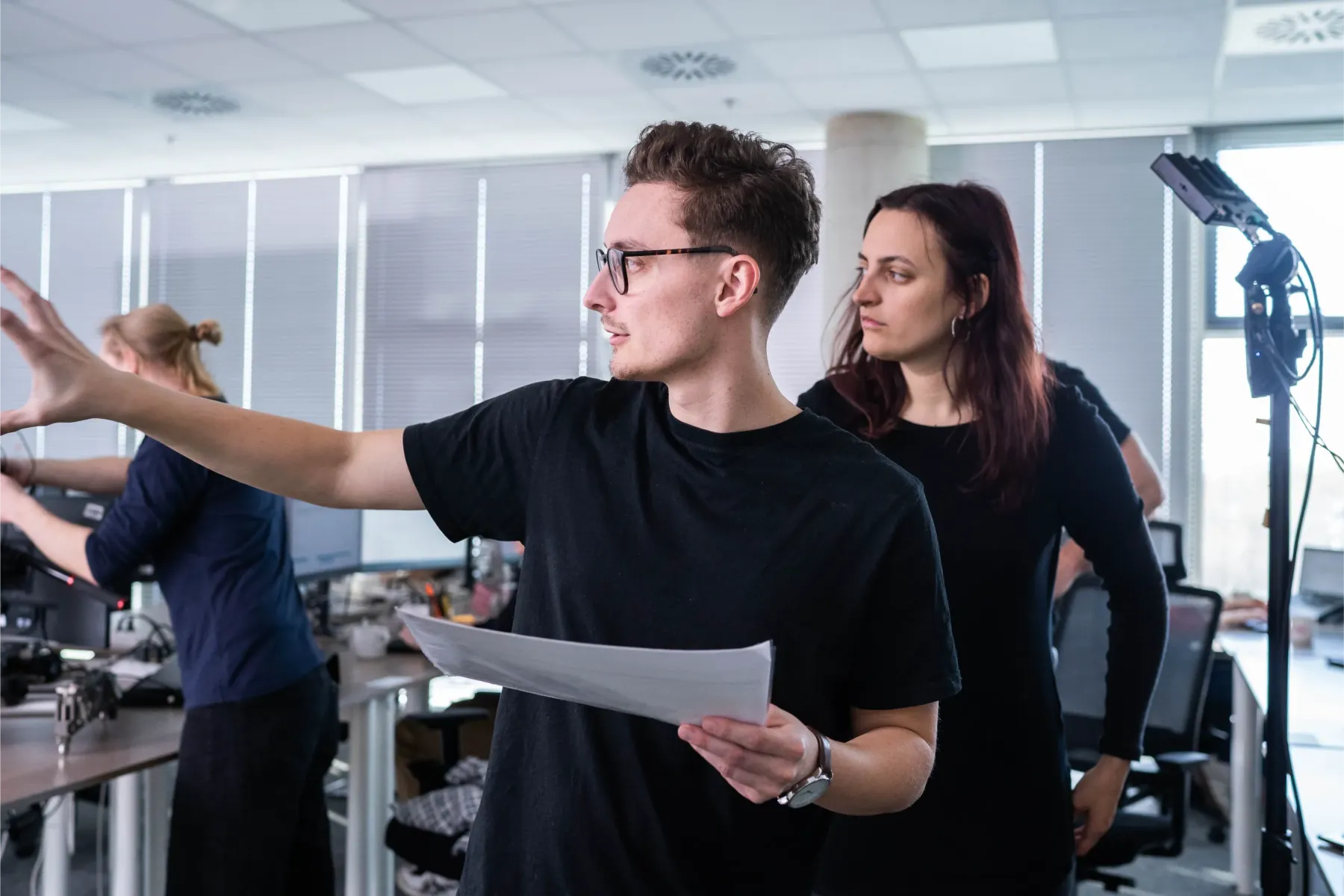
We spent the entire first shoot day on the office half of the campaign.
Because the client had slowed operations across practically the whole building for us, and most employees were working from home, this part had to be finished in a single day. There was no room for pickups and no space to reshoot.
Most of the shots still to come were fairly complex, and the schedule came out to roughly 14 hours of work if we picked up no delay. It was an intense day, hard on the body and on the head.
The final length of the shoot? Sixteen hours including the wrap. And we got it all done.
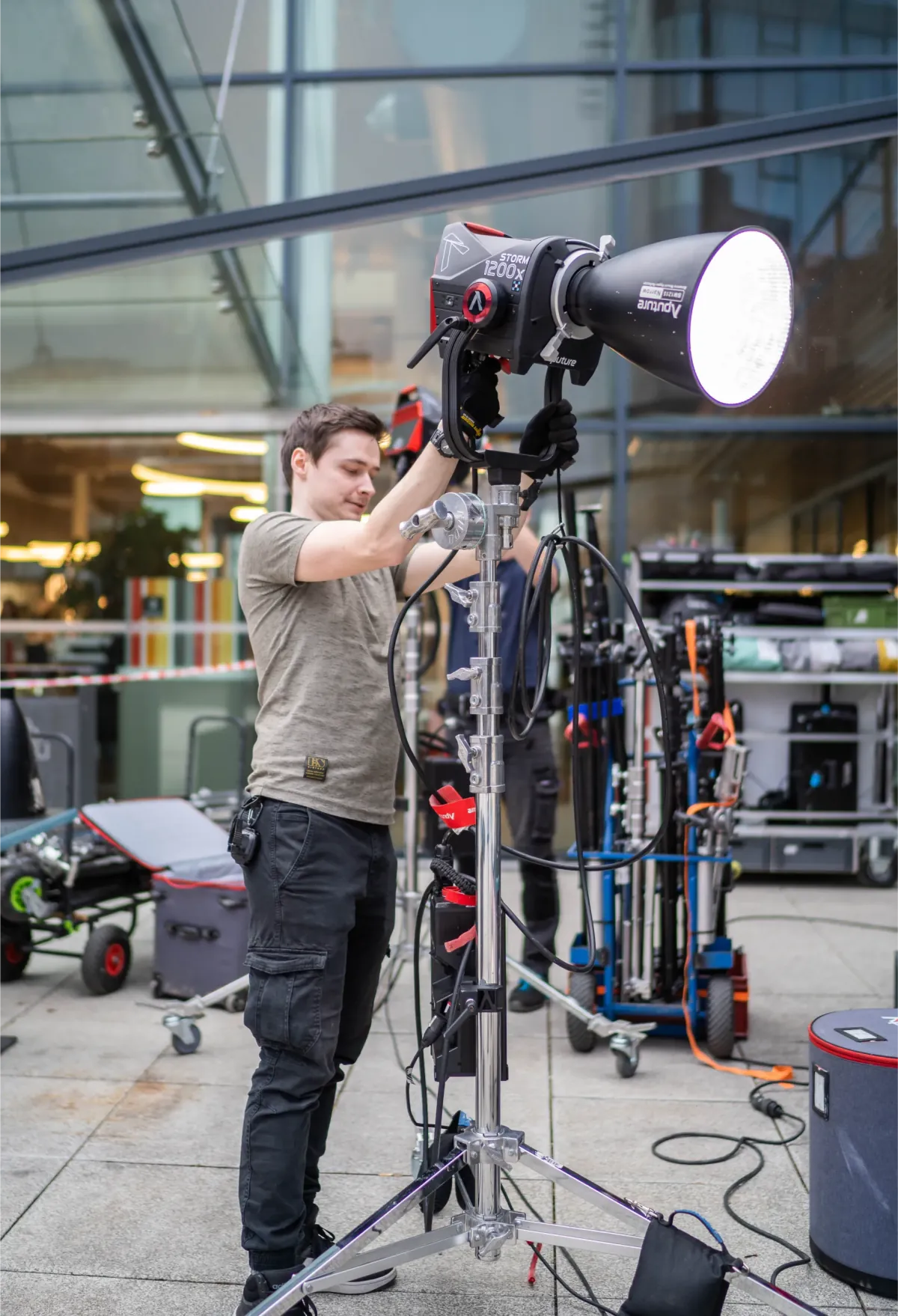
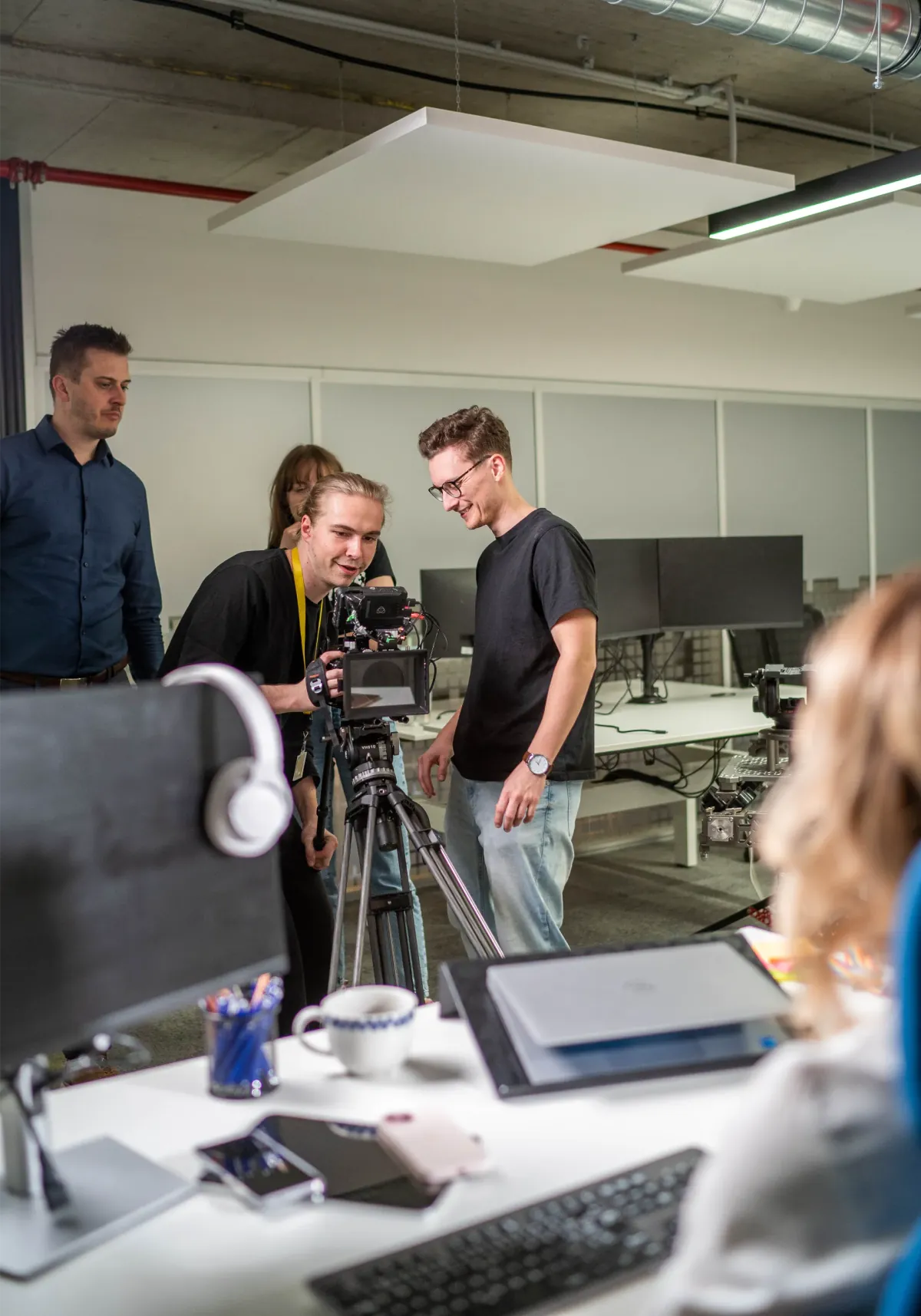
The camera that was supposed to solve everything
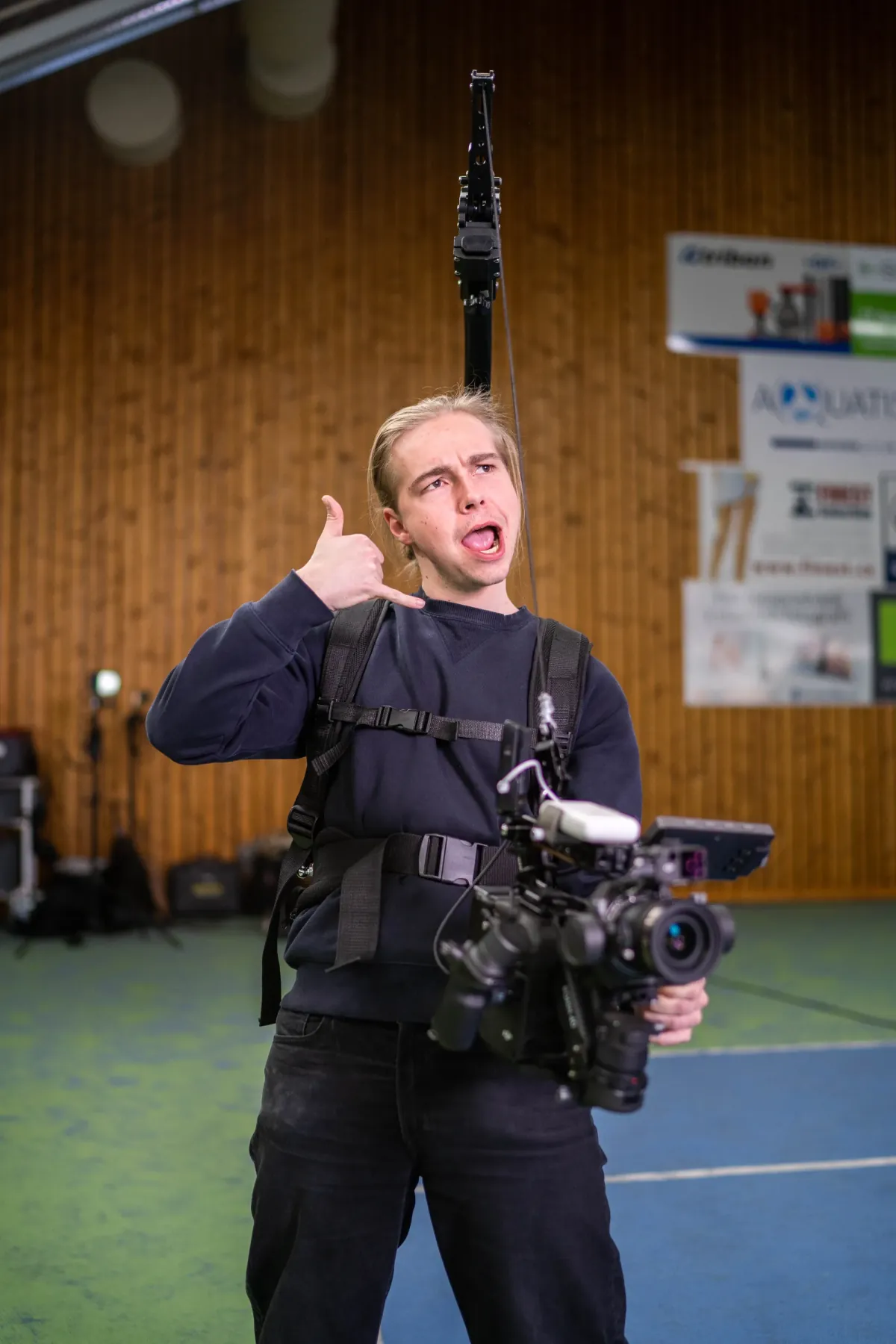
We were shooting a lot of material in a repeating office environment, so each spot needed something to set it apart. We tried to add a special shot every time, whether that was a wild macro push-in or the orbital transition between worlds that was already written into the script.
We tested the orbit several times before the shoot. Day one in the office had about 70 shots on the list (too many), so we had to be as efficient as possible. Camera track was out from the start.
We also tested different wheels for tripods and various tricks for circling an actor in a chair with the camera. After all of that testing, the simplest and fastest answer was to rent a Ronin 4D (callsign: slepice), a camera with a built-in gimbal that stabilises the image on all four axes.
A tennis ball in third person
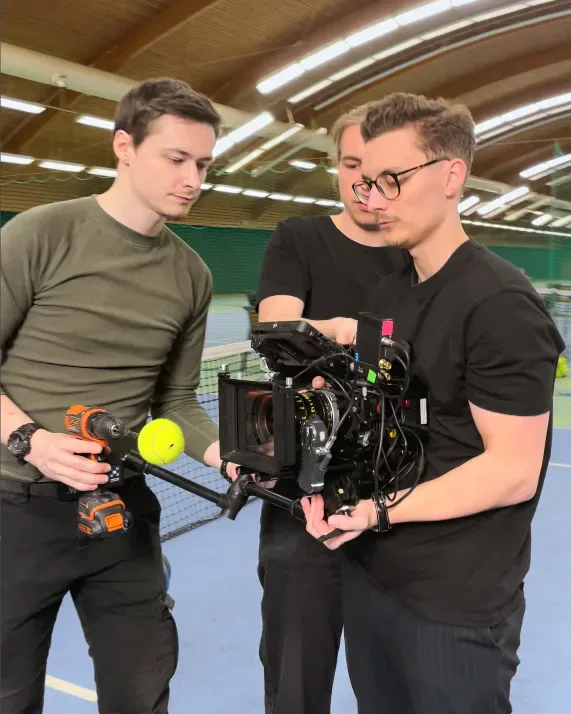
Another way we found to give a spot its own signature was a camera attached to a flying tennis ball.
During tests we built a very simple rig for it. We stuck the ball on a metal rod (a cocktail straw happened to be nearby, so the straw took the hit). Then we fixed the straw into a cordless drill and mounted the whole drill to the camera.
The drill’s little light even lit the spinning ball rather nicely. Our gaffer later shut that down, of course, and taped over the light.
In post we removed the rod that connected the drill to the ball, and what was left was another special shot: the tennis ball in third person.
So how did it go with the dog?
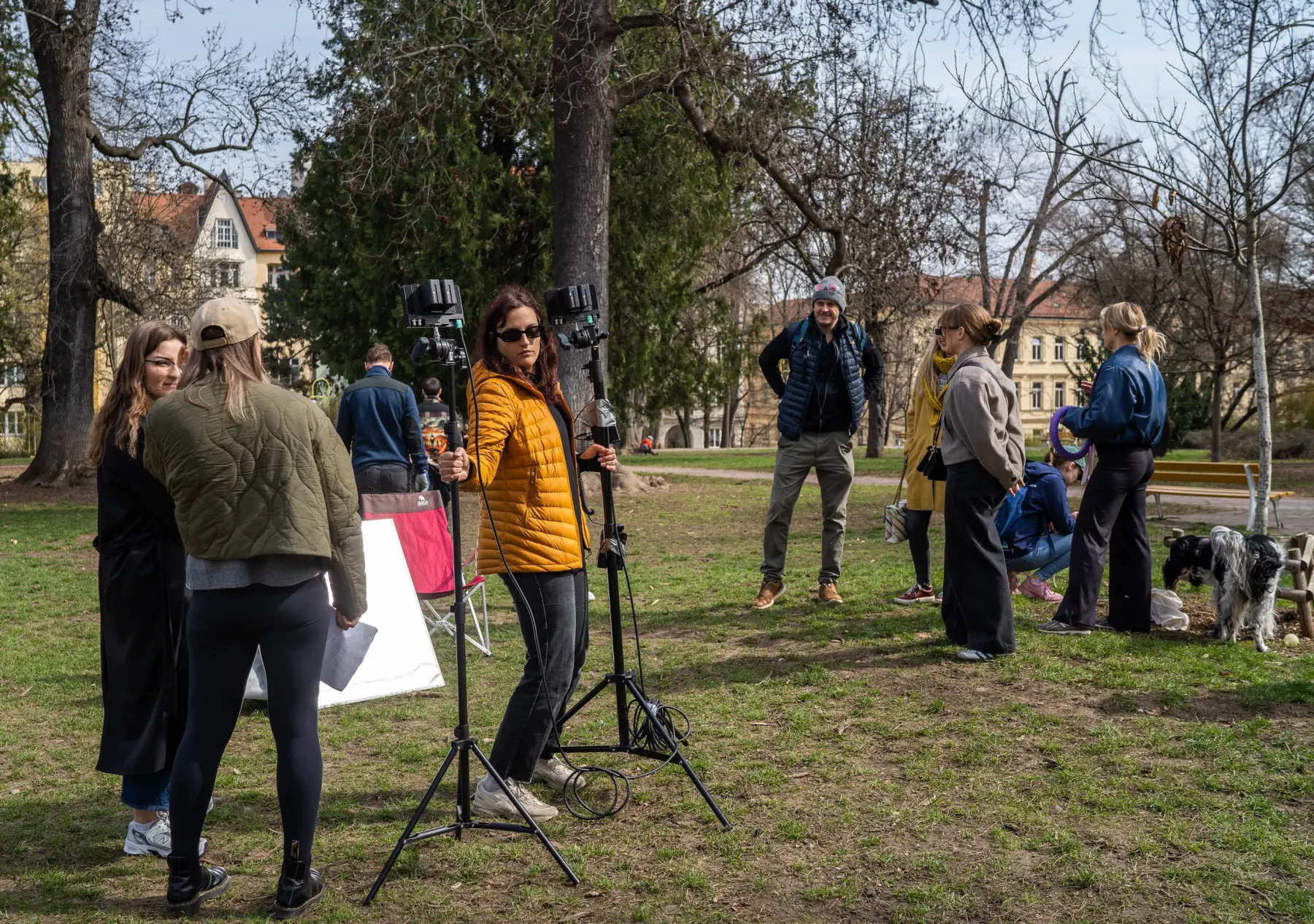
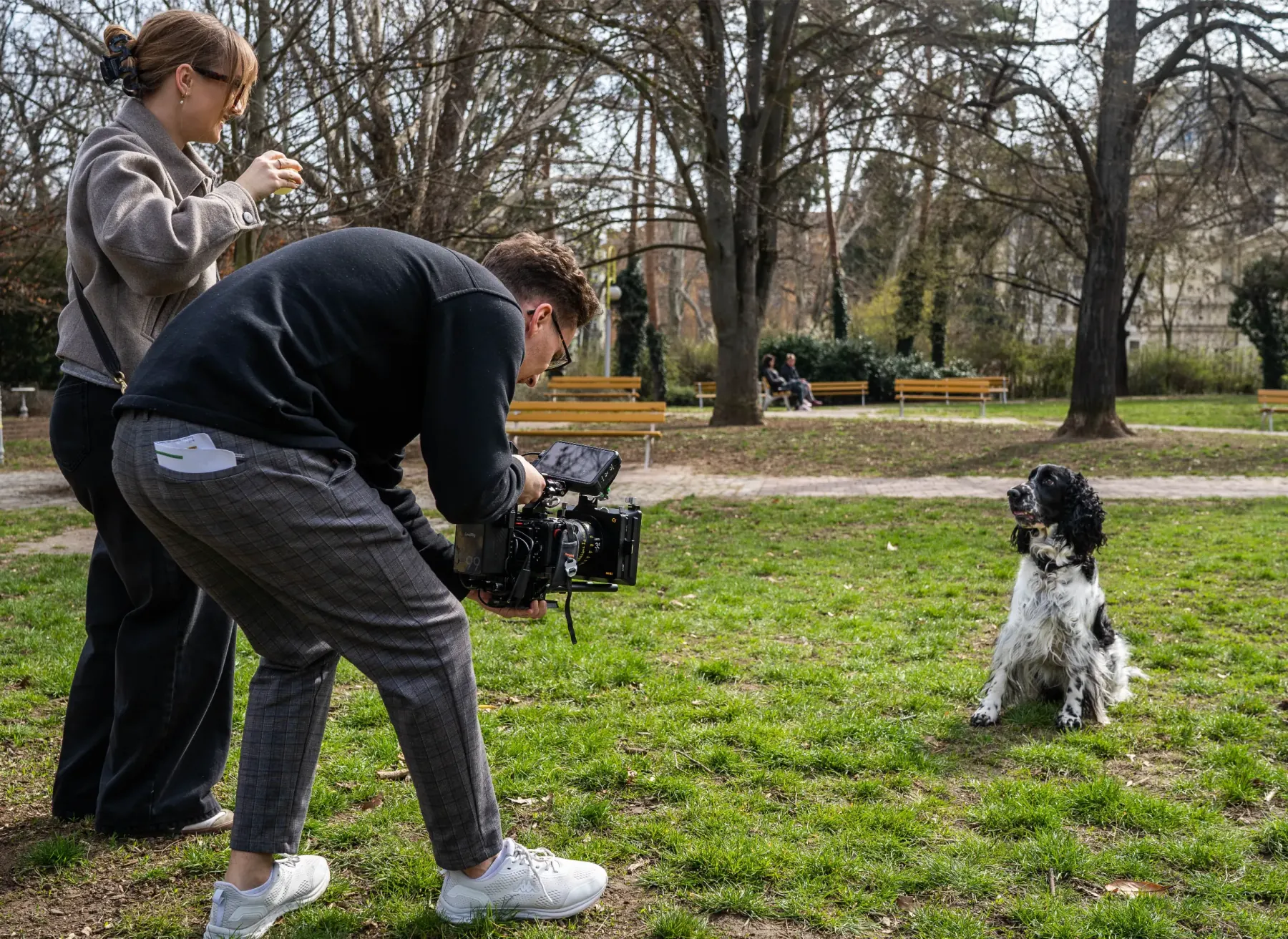
The dog was a little distracted, but well trained, so we used the same trick as with the kids. We let the camera roll continuously and gradually eased him into the situation we needed. No extra stress, and no waiting for him to hit the mark on command.
Then we just pulled our two seconds out of that continuous take. It worked the same way with the children, who, by the way, were excellently trained too.
Post-production, 24 hours straight
We have the footage. Now it all has to be delivered.
We signed up to deliver the whole project within 17 days of the shoot. Post was split into four phases: first cuts of the spots, then feedback, then masters, and from those masters every format the client asked for.
There were a lot of them. The client wanted exports for practically every platform, including Spotify, which brought us to about 70 final formats.
On this project we also tested a shared timeline at scale. Adam got up, worked his hours and went to sleep. He handed the project straight to Tomáš, who was just getting up. Tomáš worked his hours and handed it back to Adam. And on it went, in shifts.
We were passing the timeline practically from bed to bed, and on the last day, with the deadline closing in, the edit barely stopped for 24 hours.